
Soundproofing Insulation in Alhambra, CA
Expert Soundproofing Insulation in Alhambra, CA — Storm-Tested, Warranty-Backed
Need soundproofing insulation in Alhambra, CA? Alhambra Insulation Masters reduces freeway & neighbor noise. Call (626) 790-7419 for a free quote today.
Soundproofing insulation is a specialized building solution designed to reduce the transmission of airborne noise, impact noise, and vibration through walls, floors, ceilings, and other structural assemblies. In Alhambra, CA — a densely populated city in the San Gabriel Valley — unwanted noise from neighboring units, busy surface streets, and the nearby Interstate 10 and State Route 710 corridors makes effective soundproofing insulation a practical necessity rather than a luxury.
At Alhambra Insulation Masters, we deliver professional soundproofing insulation services tailored specifically to the construction styles, climate conditions, and noise challenges found throughout Alhambra. Whether you own a 1940s craftsman bungalow near Garfield Avenue, a mid-century apartment complex off Valley Boulevard, or a modern commercial space in the downtown corridor, our team has the materials, methods, and local knowledge to significantly reduce noise intrusion and improve your indoor comfort.
Call us today at (626) 790-7419 to schedule your free soundproofing assessment.
Understanding Soundproofing Insulation
Soundproofing insulation works by absorbing, blocking, damping, or decoupling sound energy before it travels from one space to another. Unlike standard thermal insulation, which is primarily engineered to resist heat flow, soundproofing insulation prioritizes acoustic performance — measured by ratings such as Sound Transmission Class (STC) and Impact Insulation Class (IIC). A wall assembly with an STC rating of 50 or higher is generally considered adequate for blocking normal speech, while ratings above 60 are required in settings where music, mechanical equipment, or street traffic are ongoing concerns.
Historically, early California residential construction paid little attention to acoustic separation. Homes built across Alhambra between the 1920s and 1960s — many of which still stand today — were framed with single-stud walls, minimal cavity fill, and no resilient channels or mass-loaded vinyl. As the San Gabriel Valley urbanized through the post-war boom, the gap between construction standards and acoustic comfort widened considerably.
Read moreShow less
Modern soundproofing insulation materials include dense-pack cellulose, mineral wool (also called rockwool or slag wool), spray foam, and composite barrier systems incorporating mass-loaded vinyl (MLV). Each material has a distinct acoustic profile. Mineral wool, for example, achieves excellent noise absorption due to its high density — typically 2.5 to 8 pounds per cubic foot — and is non-combustible, making it particularly well-suited to California’s strict building codes under Title 24.
In multi-family housing — which makes up a significant portion of Alhambra’s residential stock — impact noise from footsteps, furniture movement, and plumbing vibration is as problematic as airborne noise. Effective soundproofing insulation systems address both categories simultaneously, combining cavity-fill materials with decoupling hardware and strategic air sealing.
Understanding the difference between absorption (softening sound within a room), blocking (preventing sound from crossing a barrier), and damping (reducing structural vibration) is essential before selecting the right solution for any given space in Alhambra.
Why Soundproofing Insulation Is Needed in Alhambra, CA
Interstate 10 and State Route 710 Corridor Noise
The San Bernardino Freeway (I-10) runs along the southern boundary of Alhambra, and SR-710 (the Garfield Avenue stub) cuts through the city’s eastern neighborhoods. The California Department of Transportation (Caltrans) has measured freeway noise levels along the I-10 corridor at 70 to 78 decibels (dB) at distances of 50 to 150 feet from the roadway — well above the 45 dB interior standard recommended by the U.S. Department of Housing and Urban Development for sleeping areas. Residential properties along South Almansor Street, Glendon Way, and South Fremont Avenue are among those most directly affected. Without adequate soundproofing insulation, residents in these zones experience sustained noise intrusion that disrupts sleep, communication, and concentration.
Valley Boulevard and Garfield Avenue Traffic
Valley Boulevard and Garfield Avenue serve as two of Alhambra’s primary commercial arterials, accommodating heavy bus traffic, freight delivery vehicles, and consistent passenger car volume throughout the day and into the late evening. Noise measurements along Valley Boulevard near the intersection of Garfield Avenue regularly reach 65 to 72 dB during peak hours. Mixed-use buildings along these corridors — where ground-floor retail sits below residential units — are especially vulnerable, as commercial activities and delivery noise travel readily through uninsulated floor and ceiling assemblies.
Dense Multi-Family Housing Stock
Approximately 65 percent of Alhambra’s housing units are renter-occupied, and a significant share of those are located in apartment complexes built between 1945 and 1980 — an era when California had no mandatory acoustic separation requirements for multi-family residential construction. Buildings in neighborhoods such as North Alhambra, the Midwick Tract area, and the Emery Park district frequently feature hollow-core interior doors, single-layer drywall partitions, and no insulation within party walls. These assemblies may achieve STC ratings as low as 28 to 33, far below the minimum STC 50 required by the California Building Code for new multi-family construction today.
School and Community Facility Proximity
Alhambra Unified School District operates several campuses — including Alhambra High School on North Chapel Avenue and Mark Keppel High School on the Monterey Park border — that generate recurring noise from athletic events, outdoor gatherings, and bell schedules. Residential properties within 500 feet of these facilities report measurable daytime noise challenges that quality soundproofing insulation can meaningfully mitigate.
San Gabriel Valley Climate and Building Envelope Gaps
Alhambra’s Mediterranean climate, with warm dry summers and mild wet winters, causes wood-framed structures to expand and contract seasonally. Over time, this thermal cycling widens gaps at wall plates, around electrical boxes, and at window frames — creating flanking paths that allow sound to travel around rather than through insulated assemblies. Local seismic activity, including the effects of the 1987 Whittier Narrows earthquake (magnitude 5.9, epicenter approximately 6 miles from Alhambra’s city center), has contributed to structural settling in older homes that further degrades acoustic performance.
Free, no-obligation estimates
Talk to Alhambra Insulation Masters
Tell us what you need and we’ll take it from there.
Signs You Need Soundproofing Insulation
Noise from Adjacent Spaces
- You can clearly hear neighbors’ conversations, television audio, or music through shared walls at normal volume levels.
- Footsteps from upstairs units are audible and disruptive throughout your living area.
- Plumbing sounds — draining water, flushing toilets, pipe vibration — travel noticeably through walls and ceilings.
Street and Traffic Noise Intrusion
- Traffic noise from Valley Boulevard, Garfield Avenue, or the I-10 freeway is audible indoors even with windows closed.
- Bus pass-bys or freight truck acceleration create sudden, jarring noise spikes inside your home or office.
- You notice that outdoor noise levels change significantly based on time of day, suggesting inadequate envelope sealing.
Sleep and Concentration Disruption
- You or household members wake repeatedly during the night due to noise.
- Remote work or study is consistently interrupted by external sounds despite being in an interior room.
Urgency Indicators
- Interior noise levels regularly exceed 55 dB — easily verified with a free smartphone decibel meter app.
- Your building predates 1980 and has never had acoustic insulation installed in party walls or floor assemblies.
- Recent renovation work has opened wall or ceiling cavities that now lack any insulation fill.
Our process
Our Soundproofing Insulation Process
- 01
Free Acoustic Assessment (Day 1 — 1 to 2 Hours)
Our technician visits your Alhambra property to conduct a thorough acoustic evaluation. We identify primary noise sources — whether freeway traffic, adjacent unit noise, or mechanical systems — and use calibrated decibel meters to establish baseline interior n
- 02
Customized Soundproofing Plan (Day 1 to Day 3)
Based on the assessment, we develop a written soundproofing plan specifying materials, target STC ratings, and installation methods. For older Alhambra homes with hollow wall cavities, we often recommend dense-pack mineral wool combined with resilient channel
- 03
Material Procurement and Preparation (Day 3 to Day 5)
We source materials that meet California Title 24 compliance standards and schedule delivery to minimize disruption to your household or business. Preparatory work includes protecting flooring and furnishings, marking stud locations, and identifying utility pe
- 04
Installation (Day 5 to Day 7, Depending on Scope)
Installation methods vary by project type. For interior wall work, we may drill small access holes for blown-in installation or open drywall sections for batt or spray foam application. Mass-loaded vinyl is applied directly to framing or existing surfaces wher
- 05
Air Sealing and Decoupling (Concurrent with Step 4)
Sound travels through air gaps as readily as it travels through structural paths. We complete comprehensive air sealing at all wall and ceiling transitions, ensuring that the insulation system performs as designed rather than being bypassed by flanking noise p
- 06
Performance Verification (Day 7 to Day 8)
After installation, we conduct post-installation decibel measurements to confirm that target noise reduction levels have been achieved. We document before-and-after readings for your records.
- 07
Final Walkthrough and Documentation (Day 8)
We walk through the completed work with you, explain maintenance considerations, and provide a written summary of materials installed and STC ratings achieved.
Soundproofing Insulation Methods and Approaches
Mineral Wool (Rockwool) Batt Insulation
Mineral wool batts — such as Rockwool Safe’n’Sound — are the preferred choice for new construction or open-cavity renovations in Alhambra. With a density of approximately 2.5 lb/ft³ and excellent sound absorption across mid and high frequencies, mineral wool significantly outperforms standard fiberglass batts in acoustic applications. It is also non-combustible, meeting California fire code requirements. Best applied in exposed stud bays during construction or major renovation.
Learn moreDense-Pack Cellulose Insulation
For existing walls in Alhambra’s older residential neighborhoods — where opening drywall is cost-prohibitive — dense-pack cellulose blown in at 3.5 to 3.7 lb/ft³ fills the cavity completely and delivers meaningful noise reduction without full demolition. This method is particularly effective in single-family homes in the Midwick Tract and North Alhambra areas built during the 1940s and 1950s.
Learn moreSpray Foam Insulation
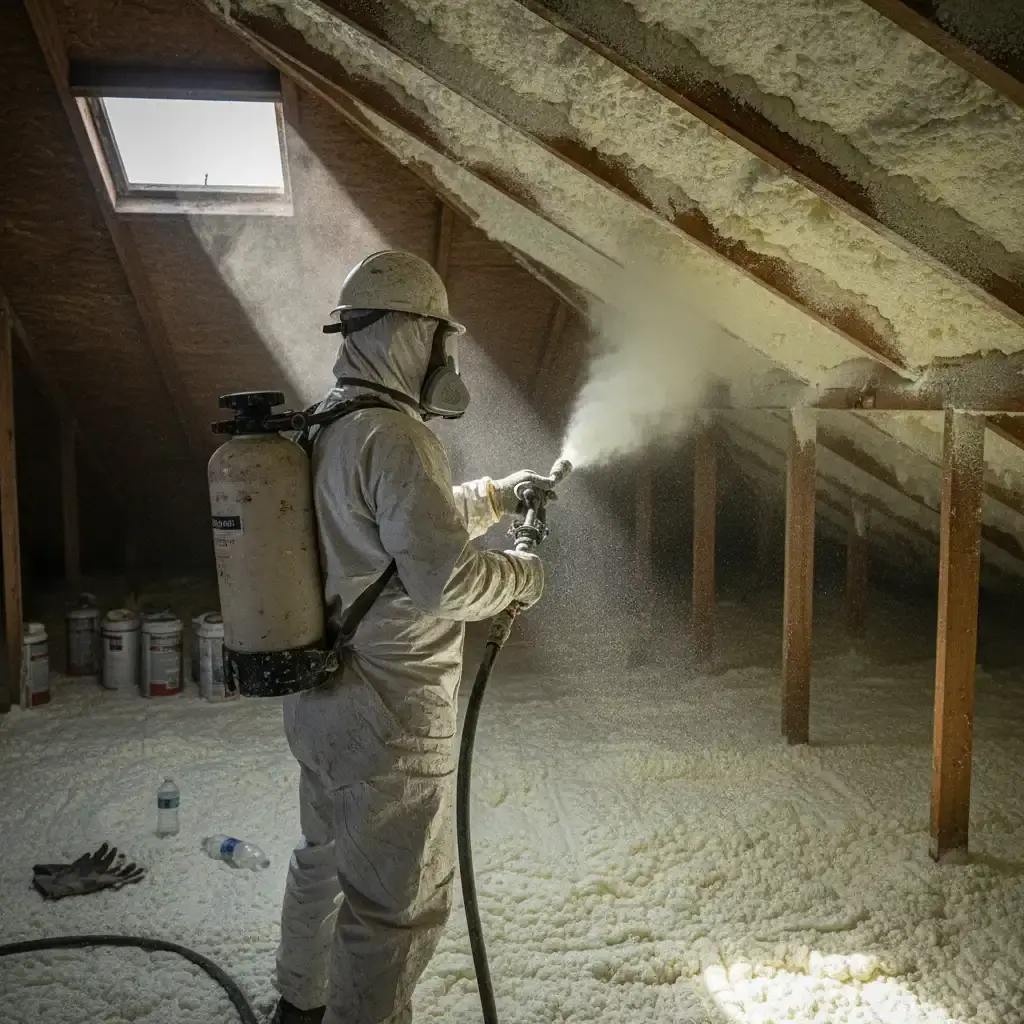
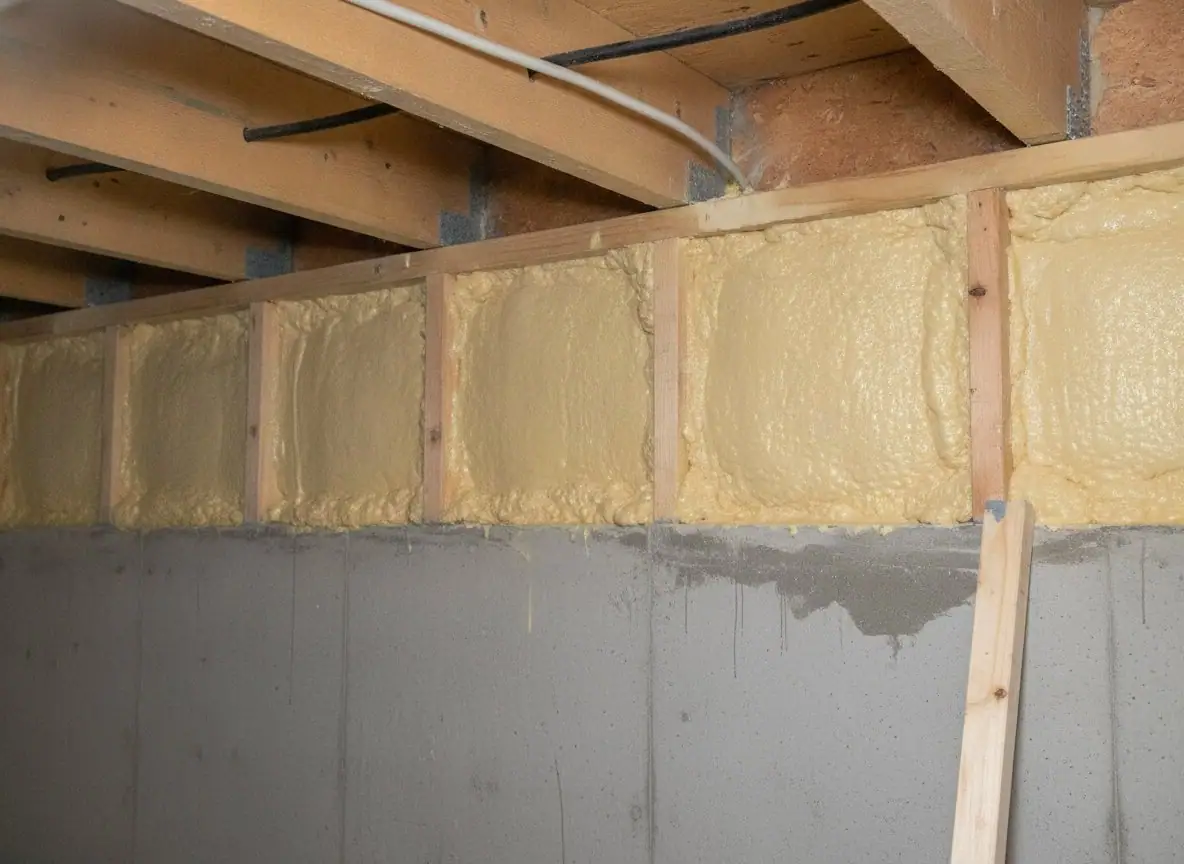
Closed-cell spray foam is used strategically at rim joists, wall perimeters, and mechanical penetrations where both air sealing and noise attenuation are required simultaneously. While not the highest-performing acoustic insulator in cavity fill applications, spray foam excels at eliminating flanking paths — the number-one cause of soundproofing system failures. Learn more about our spray foam insulation services
Learn moreMass-Loaded Vinyl (MLV) Barriers
MLV — a dense, flexible sheet material weighing 1 to 2 lb/ft² — is applied to walls, ceilings, and floors to add mass and block airborne sound transmission. Commonly used in Alhambra apartment buildings where existing wall assemblies have very low STC ratings, MLV can be installed over existing drywall without full demolition.
Blown-In Insulation for Attic and Floor Cavities
Attic spaces in Alhambra homes frequently serve as a sound conduit between floors. Adding blown-in insulation to attic floors improves both thermal and acoustic performance. Explore our blow-in insulation options
Soundproofing Insulation Cost in Alhambra, CA
The cost of soundproofing insulation in Alhambra varies based on the size of the area being treated, the method selected, and the degree of access required. Below are typical price ranges for the Alhambra market:
Typical Cost Ranges
- Dense-pack cellulose (existing walls, per square foot of wall area): $2.50 – $4.50
- Mineral wool batt installation (open cavity, per square foot): $1.75 – $3.25
- Mass-loaded vinyl (supply and install, per square foot): $2.00 – $5.00
- Spray foam (perimeter air sealing, per linear foot): $1.50 – $3.00
- Full room soundproofing package (walls and ceiling, average 200 sq ft room): $1,800 – $4,500
- Whole-home soundproofing insulation upgrade (1,200 sq ft single-family home): $6,500 – $14,000
Read moreShow less
Factors That Affect Your Alhambra Project Cost
- Access method: Drilling and blowing into closed cavities costs more than installing batts in open framing.
- Wall assembly complexity: Older Alhambra homes with non-standard stud spacing or fire blocking require additional labor.
- Target STC rating: Achieving STC 55+ requires additional layers of material and decoupling hardware beyond basic cavity fill.
- Number of flanking paths: Dense urban lots common in Central Alhambra often require extensive air sealing at plumbing and electrical penetrations.
- Permit requirements: The City of Alhambra may require permits for work involving drywall replacement; we manage the permit process on your behalf.
Contact us at (626) 790-7419 for a detailed, no-obligation quote specific to your property.
Neighborhoods We Serve in Alhambra
North Alhambra
North Alhambra features a dense mix of single-family homes and small apartment buildings constructed primarily between 1935 and 1965. These properties commonly have uninsulated wood-stud walls and original single-pane windows. We frequently perform dense-pack cellulose upgrades and MLV installations in this area to address noise from Valley Boulevard bus traffic.
Midwick Tract
The Midwick Tract neighborhood — developed largely in the late 1940s around the former Midwick Country Club site — contains well-built but acoustically unoptimized single-family residences. Homeowners here often seek soundproofing for home offices and media rooms. Mineral wool batt and resilient channel systems are commonly specified for these projects.
Central Alhambra / Downtown Corridor
The downtown corridor along Main Street and Garfield Avenue includes mixed-use buildings where commercial noise from restaurants, retail, and nightlife affects upper-floor residential tenants. Multi-layer ceiling assemblies incorporating both mineral wool and MLV are standard in this zone.
Emery Park District
Located near the SR-710 corridor, Emery Park properties face elevated freeway and arterial noise. We recommend comprehensive soundproofing insulation packages for homes here, including attic insulation upgrades to address noise entering through the roof assembly.
South Alhambra (I-10 Adjacent)
Properties along South Almansor Street and South Fremont Avenue — within 500 feet of the I-10 freeway — represent our most acoustically demanding residential projects. We deploy the full range of our soundproofing systems, including crawl space treatments, in this area. Learn about crawl space insulation services
Soundproofing Insulation Maintenance Tips for Alhambra Homeowners
- Inspect wall penetrations annually: Electrical outlet boxes, cable conduits, and HVAC registers are common flanking paths. Check annually for gaps and reseal with acoustic putty as needed.
- Monitor for settling in older homes: Alhambra’s seismically active region can cause minor structural shifts that open gaps at wall plates. After any earthquake of magnitude 4.0 or greater, inspect attic and crawl space perimeters for new openings.
- Replace weatherstripping on interior doors: Sound travels readily under doors with worn seals. Replace door sweeps and perimeter weatherstripping every 3 to 5 years.
- Check attic insulation depth: Settled blown-in insulation loses both thermal and acoustic effectiveness. Maintain a minimum depth of 12 inches in attic floor assemblies.
- Avoid puncturing MLV layers: If you mount shelving or artwork on soundproofed walls, use appropriate anchors and seal any penetrations with acoustic caulk.
- Schedule a five-year acoustic review: Material performance and flanking paths change over time. A periodic professional inspection keeps your soundproofing system performing at its designed STC rating.
- Maintain HVAC duct insulation: Ductwork that passes through soundproofed assemblies can become a noise conduit if duct insulation degrades. Inspect duct wrap in attic and crawl space areas every few years.
Why Choose Alhambra Insulation Masters
Alhambra Insulation Masters is a locally focused insulation contractor serving the San Gabriel Valley with deep knowledge of Alhambra’s specific building stock, noise environment, and regulatory requirements. We are not a national franchise applying generic solutions — every project is designed around the specific acoustic challenges of your Alhambra property.
Our team has direct experience with the construction styles found throughout Alhambra’s diverse neighborhoods, from pre-war craftsman bungalows to post-war multi-family buildings to modern mixed-use commercial structures. We understand the difference between a party wall in a 1955 Midwick Tract duplex and a floor-ceiling assembly in a downtown Alhambra mixed-use development — and we design accordingly.
Read moreShow less
We use only materials that meet or exceed California Title 24 energy and building code standards, ensuring that your soundproofing improvements are also compliant and permit-ready. Our installation process prioritizes minimal disruption to occupied spaces, and we communicate clearly at every stage of the project.
We offer competitive pricing for the Alhambra and greater San Gabriel Valley market, with transparent quotes and no hidden fees. We also handle insulation removal and replacement for projects requiring a full acoustic upgrade from the studs out.
Ready to take control of your acoustic environment? Call (626) 790-7419 today.
FAQ
Frequently Asked Questions About Soundproofing Insulation in Alhambra, CA
How much does soundproofing insulation cost in Alhambra, CA?
Costs in Alhambra typically range from $1.75 to $5.00 per square foot depending on the material and access method. A single room soundproofing project generally runs $1,800 to $4,500, while whole-home upgrades for a standard Alhambra single-family home (approximately 1,200 square feet) range from $6,500 to $14,000. Factors like the age of the building, the number of flanking paths, and the target STC rating all affect final pricing.
How long does soundproofing insulation installation take in Alhambra?
A single room project typically takes one to two days. A full-home soundproofing insulation upgrade in an Alhambra single-family residence generally takes three to seven business days, depending on scope. Projects requiring drywall removal and replacement take longer. We provide a specific timeline estimate during the initial assessment.
Will soundproofing insulation completely eliminate freeway noise from the I-10?
Soundproofing insulation can significantly reduce freeway noise from the I-10 corridor — typically by 15 to 30 dB when a comprehensive system is properly installed — but complete elimination is not realistic without also addressing windows, doors, and other building envelope elements. For properties within 150 feet of the I-10, we recommend a combined approach addressing walls, attic, crawl space, and window sealing simultaneously.
Do I need a permit for soundproofing insulation in Alhambra?
Blown-in insulation work in existing closed cavities typically does not require a permit in the City of Alhambra. Projects involving drywall removal and replacement, or structural modifications, may trigger permit requirements under the Alhambra Building and Safety Division. We evaluate permit requirements during the assessment phase and manage the application process when permits are needed.
What is the difference between soundproofing insulation and regular thermal insulation?
Standard thermal insulation — such as fiberglass batts — is designed to resist heat flow and is measured by R-value. Soundproofing insulation prioritizes acoustic performance, measured by STC (airborne noise) and IIC (impact noise) ratings. While some overlap exists — dense-pack cellulose and mineral wool both provide thermal and acoustic benefits — a thermal-only product like standard fiberglass batt provides minimal noise reduction at typical wall densities.
Can soundproofing insulation be added to existing walls without removing drywall?
Yes. Dense-pack cellulose and injection foam can be installed into existing closed wall cavities by drilling small access holes (typically 2 to 3 inches in diameter) between studs. The holes are patched after installation. This is the most common approach in Alhambra’s older residential neighborhoods where demolition is not practical or cost-effective.
Does soundproofing insulation also improve energy efficiency?
Yes, in most cases. Materials like dense-pack cellulose and mineral wool that are installed for acoustic purposes also reduce thermal bridging and air infiltration. Alhambra homeowners who invest in soundproofing insulation often report measurable reductions in heating and cooling costs as a secondary benefit — particularly valuable given the San Gabriel Valley’s warm summer temperatures. Explore attic insulation options that combine thermal and acoustic benefits
How do I know if my apartment building in Alhambra qualifies for soundproofing insulation work?
Any Alhambra apartment building can benefit from soundproofing insulation. If you are a tenant, work with your property owner to arrange the assessment. If you are a landlord or property manager, multi-unit projects often qualify for volume pricing. Buildings constructed before 1980 — which make up a large percentage of Alhambra’s rental stock — typically show the greatest acoustic improvement from insulation upgrades.
Get Your Free Soundproofing Insulation Assessment in Alhambra Today
If freeway noise from the I-10, traffic sounds from Valley Boulevard, or noise from adjacent units is affecting your quality of life, Alhambra Insulation Masters is ready to help. We serve all Alhambra neighborhoods — from North Alhambra and the Midwick Tract to South Alhambra and the downtown corridor — with professional soundproofing insulation solutions designed specifically for this city’s buildings and noise challenges.
Our team will assess your property, recommend the most cost-effective solution, and deliver measurable results backed by precise before-and-after acoustic documentation.
Call us now at (626) 790-7419 to schedule your free on-site evaluation. You can also reach us through our contact page. Quiet, comfortable spaces in Alhambra start with a single call — make it today.
Request a Free Soundproofing Quote Online
Get in touch
Find insulation help near you
Request a free estimate online or give us a call — our team will follow up quickly.
- Call us(626) 790-7419
- Visit901 S Fremont Ave, Alhambra, CA 91803
- HoursMon-Sun 07:00-19:00